NFL Free Agency Impact on Futures: Odds Shifts
 Available in US
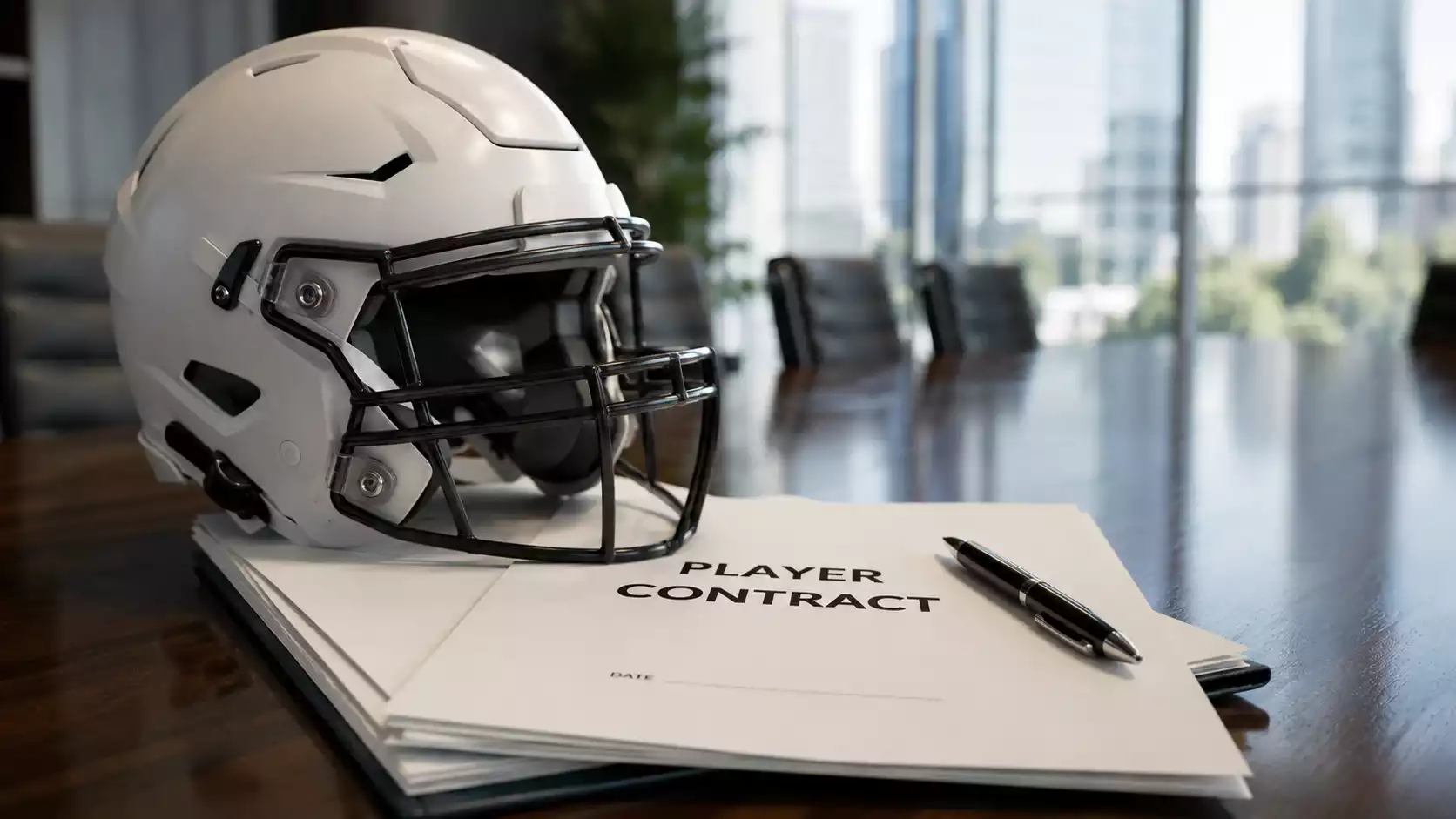
March 2024 taught me a lesson about free-agency timing that I won’t forget. I’d placed three futures positions in February — two win totals and a division winner — and felt good about all of them. Then the legal tampering window opened and one of my teams lost its starting left tackle and top cornerback within 48 hours. The win-total line barely moved because the market was focused on the splashy signings happening elsewhere, but my projection for that team dropped a full win overnight. I should have waited. Free agency is the most chaotic period in the NFL offseason, and betting before it resolves means accepting risk that is quantifiable only in hindsight.
The free-agency window — from the legal tampering period in mid-March through early April — is one of the four critical timing windows for NFL futures bettors. It’s also the window where the market is least efficient, because the information arrives in rapid bursts that bookmakers can’t fully digest in real time. A $30 billion NFL betting market means enormous sums are being wagered on futures year-round, and the free-agency period generates the most violent odds movements of any offseason stretch.
Roster Positions Moving Futures Lines
Not all signings are created equal in terms of their impact on futures odds. I’ve tracked the average odds movement following major free-agent signings at every position over the past six offseasons, and the hierarchy is clear.
Quarterback signings produce the largest immediate movement. A team that acquires a proven starting quarterback in free agency sees its Super Bowl odds shorten by 20-40% and its win total shift by 1.0-2.5 wins within days. The market treats quarterback acquisitions as transformative events, and for good reason — quarterback play explains more win-total variance than any other single position. However, the market also tends to overreact to quarterback signings. The historical record shows that quarterbacks changing teams in free agency underperform their prior-team production in year one more often than they match or exceed it. The adjustment period — new offensive system, new receivers, new protection schemes — is real and predictable.
Edge rushers and cornerbacks are the next tier. A top-tier pass rusher signing shortens the acquiring team’s odds by 10-20% and can move the win total by half a win to a full win. Elite corners have a similar effect. What’s notable is that the market tends to overvalue edge rushers and undervalue cornerbacks, despite the analytical consensus that coverage quality is at least as important as pass-rush production for overall defensive performance. This creates a repeatable pattern: teams signing elite corners at full market price are often still underpriced in the futures market because the signing doesn’t generate the same headlines as a 15-sack pass rusher.
Offensive line signings move futures lines the least relative to their actual impact on team performance. A team that signs a Pro Bowl guard or centre might see its win total adjust by a quarter of a win — barely perceptible — despite the signing meaningfully improving both the passing game (through better protection) and the rushing game (through better run blocking). I actively look for futures value on teams that have quietly upgraded their offensive lines during free agency, because these moves are systematically underpriced by a market that responds to name recognition and sack totals more than to blocking grades.
Salary Cap Traps: When Big Signings Mislead the Market
The most dangerous assumption in free-agency futures analysis is that spending money equals improvement. Teams that dominate free agency in terms of total dollars spent are often the teams with the most cap space — which correlates with being bad the year before. A team that went 5-12 and then spends $120 million in free agency has addressed its roster holes, but it’s still building around the same coaching staff, the same quarterback (usually), and the same organisational infrastructure that produced a five-win season.
I call these “salary cap mirages.” The market sees the spending, projects improvement, and shortens the odds. But the historical data on teams that rank in the top five of free-agency spending shows that their win improvement in year one averages only about 1.5-2.0 wins — far less than the 3-4 win improvement the market often prices in. The disconnect is the market treating each signing as additive, when in practice the value of signings is diminished by scheme fit, locker-room integration, and the time it takes for new players to gel with existing teammates.
The opposite is also true and often more profitable. Teams that lose significant free agents — because they couldn’t afford to re-sign them, or chose to let them walk — see their odds lengthen. The market assumes the departures represent a downgrade, and they often do. But the magnitude of the downgrade is frequently overstated, particularly when the departing player was older, injury-prone, or had declining efficiency metrics that suggested his prior production wasn’t sustainable anyway. Buying futures on teams that have “lost” ageing free agents at prices that assume a larger decline than the actual talent loss warrants has been one of my more consistent edges.
Timing Futures Bets Around the Free Agency Window
My approach to the free-agency window is deliberately staged. I do not place any new futures positions during the first 72 hours of legal tampering and the first week of the new league year. The information flow is too fast, the market is too reactive, and the odds are moving in ways that make it impossible to evaluate value in real time.
After the initial frenzy subsides — typically by the end of the second week of free agency — the market begins to stabilise. Bookmakers have digested the major moves, adjusted their lines, and the sharpest bettors have already acted on the most obvious mispricings. This is when I evaluate the landscape. I compare my pre-free-agency projections with the post-free-agency reality, identify which teams have genuinely improved and which have been overpriced by the market’s reaction to headline signings, and place my positions accordingly.
The sweet spot for post-free-agency futures betting is the two-week window between the market stabilising after major signings and the draft disrupting everything again. This gap — roughly late March to mid-April — offers the calmest information environment of the offseason. The roster is largely set (barring draft picks), the coaching staff is in place, and the bookmakers have priced in the offseason moves. Mispricings during this window are subtler than during the free-agency frenzy but often more reliable, because they reflect genuine analytical disagreements rather than reactionary pricing. The timing windows guide covers how this free-agency period fits within the broader annual calendar for NFL futures betting.
How quickly do bookmakers adjust NFL futures after a major signing?
For quarterback signings and other marquee moves, bookmakers adjust within hours — sometimes within minutes. For lower-profile signings like offensive linemen or backup additions, the adjustment may take a day or more, and the magnitude is often smaller than the actual impact warrants. The speed of adjustment inversely correlates with the market’s analytical capacity at that position: glamour positions are priced quickly, trench positions more slowly.
Does signing a top free agent reliably improve a team’s win total?
On average, teams that rank in the top five of free-agency spending improve by 1.5-2.0 wins in the following season. However, the market often prices in a larger improvement (3-4 wins), creating a gap between expectations and reality. The most reliable improvements come from targeted additions at high-impact positions — quarterback, edge rusher, and cornerback — rather than from broad spending across multiple roster spots.
Published by the Best nfl Futures Bets team.