NFL Coaching Changes & Futures: Market Impact
 Available in US
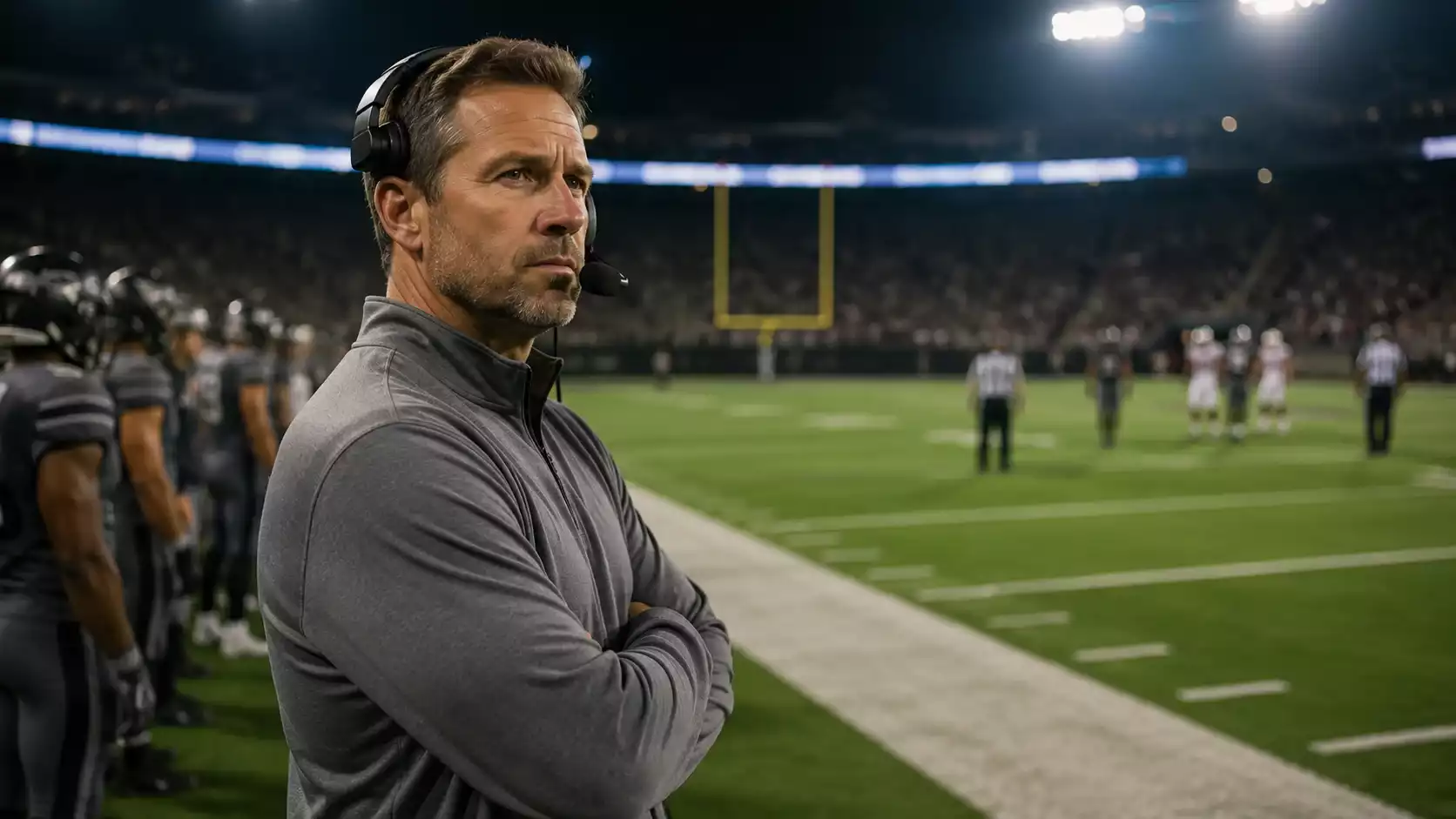
Five seasons ago I backed a team’s win total over at 7.5 because their roster looked undervalued. What I failed to account for was that their new head coach — a first-time coordinator promotion — was installing a completely different offensive system from scratch. The team started 1-5 as players learned new terminology, new blocking schemes, and new route concepts on the fly. They rallied to finish 7-10, pushing exactly to the number I’d bet over and settling as a loss on the half-point. That season taught me to respect the disruption that coaching changes create, regardless of how talented the roster looks on paper.
Coaching hires are among the most consequential offseason events for futures markets, yet they’re also among the most difficult to price. A new head coach changes everything — scheme, culture, play-calling philosophy, player evaluation, practice structure — and the compound effect of those changes on win-loss record is stubbornly hard to predict from the outside. The market’s pricing of coaching changes tends to swing between two extremes: either too much optimism (when a splashy hire generates excitement) or too little adjustment (when a quiet internal promotion is dismissed as unimportant). Both extremes create value.
First-Year Head Coach Performance Data
I compiled first-year head coach records going back fifteen seasons, separating them into categories: first-time head coaches promoted from coordinator roles, experienced head coaches taking their second or third job, and interim coaches who were elevated permanently. The patterns are distinct.
First-time head coaches from coordinator promotions show the widest variance. Their average first-year record is roughly one win below the team’s prior-season total, driven by the learning curve of managing a 53-man roster, handling media obligations, and establishing a new culture — all while simultaneously installing a new system. But the distribution is fat-tailed: some first-timers exceed expectations dramatically, while others collapse. The market tends to price first-time hires at approximately the team’s prior record, which means the average outcome (a slight decline) offers value on the under.
Experienced retreads — coaches taking their second or third head coaching job — perform more predictably. Their first-year records cluster closer to the team’s prior-season performance, with a slight uptick on average. These coaches have already navigated the logistical challenges of running a team, so the adjustment period is shorter. The market also prices these hires more accurately, because there’s a larger sample of prior performance to anchor on. I find fewer mispriced opportunities with experienced hires and typically don’t adjust my win-total models as aggressively for them.
The most interesting subset is the new-hire-plus-quarterback combination — a team that changes both its head coach and its starting quarterback in the same offseason. These dual transitions produce the lowest average first-year win totals across all categories: roughly 2-3 wins below the prior season’s record. The compounding disruption of learning a new system with a new play-caller using a new signal-caller is almost always underestimated by the market, which tends to price each change independently rather than accounting for the interaction effect.
Offensive and Defensive Coordinator Changes: The Hidden Movers
Head coach hires dominate the headlines, but coordinator changes often have a more direct and immediate impact on specific futures markets. A new offensive coordinator can transform a team’s scoring output, passing volume, and rushing efficiency within a single season — all of which feed directly into win totals, player-season props, and Super Bowl odds. Similarly, a new defensive coordinator can reshape a team’s ability to create turnovers, generate sacks, and limit scoring, which affects the same markets from the other side of the ball.
I track three specific coordinator-change scenarios that consistently create mispriced futures. The first is the “system import” — a coordinator who brings a proven system from a successful team to a new one. If the new team has the personnel to run that system (particularly at quarterback), the improvement can be dramatic and fast. The second is the “scheme mismatch” — a coordinator whose system is fundamentally incompatible with the roster he inherits. A new coordinator who wants to run a heavy play-action, run-first offence on a team with a great passing quarterback and a weak offensive line is going to struggle, and the market often gives too much credit to the coordinator’s reputation without accounting for the fit.
The third scenario is the “replacement downgrade” — when a team loses an elite coordinator to a head coaching job and promotes from within. These internal promotions rarely generate the same results as the departed coordinator, at least in year one, but the market often assumes continuity because the playbook nominally stays the same. The playbook might not change, but the play-calling, the adjustments, and the ability to develop game plans do — and that drop-off is real and measurable.
Adjusting Win Total Bets for Coaching Transitions
My framework for adjusting win-total projections around coaching changes is built on a simple matrix. I start with the team’s prior-season win total and apply adjustments based on the coaching transition type.
For a first-time head coach with a new system, I subtract 1.0 to 1.5 wins from my projection relative to the prior season. For an experienced retread, I make no adjustment or add 0.5 wins depending on the hire’s track record. For a dual transition (new coach plus new quarterback), I subtract 2.0 to 2.5 wins. These are starting points that I refine based on scheme fit, roster talent, and division difficulty, but the framework prevents me from getting seduced by the optimistic narratives that always surround new coaching hires.
The market regularly underprices the under on teams with first-year head coaches. In my fifteen-season dataset, betting the under on every first-time head coach’s win total would have produced a positive return, not because every team underperforms, but because the average underperformance is larger than the market’s average adjustment. The edge is modest — you won’t get rich on it — but it’s consistent, repeatable, and grounded in structural data rather than opinion.
Coordinator changes require more nuanced adjustment. I add or subtract half a win for an offensive coordinator change, depending on whether I classify the transition as an upgrade, downgrade, or lateral move. Defensive coordinator changes get a similar but smaller adjustment because defensive scheme transitions tend to produce results more slowly than offensive ones — new blocking schemes and route concepts can be installed in a training camp, but new coverage techniques and defensive communication systems take longer to build trust among players. The win totals analysis covers how these coaching adjustments integrate with the broader regression framework I use for over/under selections.
Do teams with new head coaches tend to go over or under their win totals?
Teams with first-time head coaches underperform their prior-season record by roughly one win on average, which means the under has historically offered a small but consistent edge. Experienced coaches taking a second or third job show less decline. The most dramatic underperformance occurs when a team changes both its head coach and starting quarterback in the same offseason, producing an average decline of two to three wins from the prior season.
How quickly does a new offensive scheme show results?
Offensive scheme changes typically show measurable results faster than defensive changes. A new offensive coordinator can install core concepts during a single training camp, and improvements in scoring and yardage often appear within the first half of the season. Defensive scheme transitions usually take longer because they require players to develop new communication patterns and trust within coverage assignments, with the full effect often not visible until the second half of the season or even year two.
Created by the ”Best nfl Futures Bets” editorial team.