NFL Defensive Player of the Year Odds 2026: DPOY Picks
 Available in US
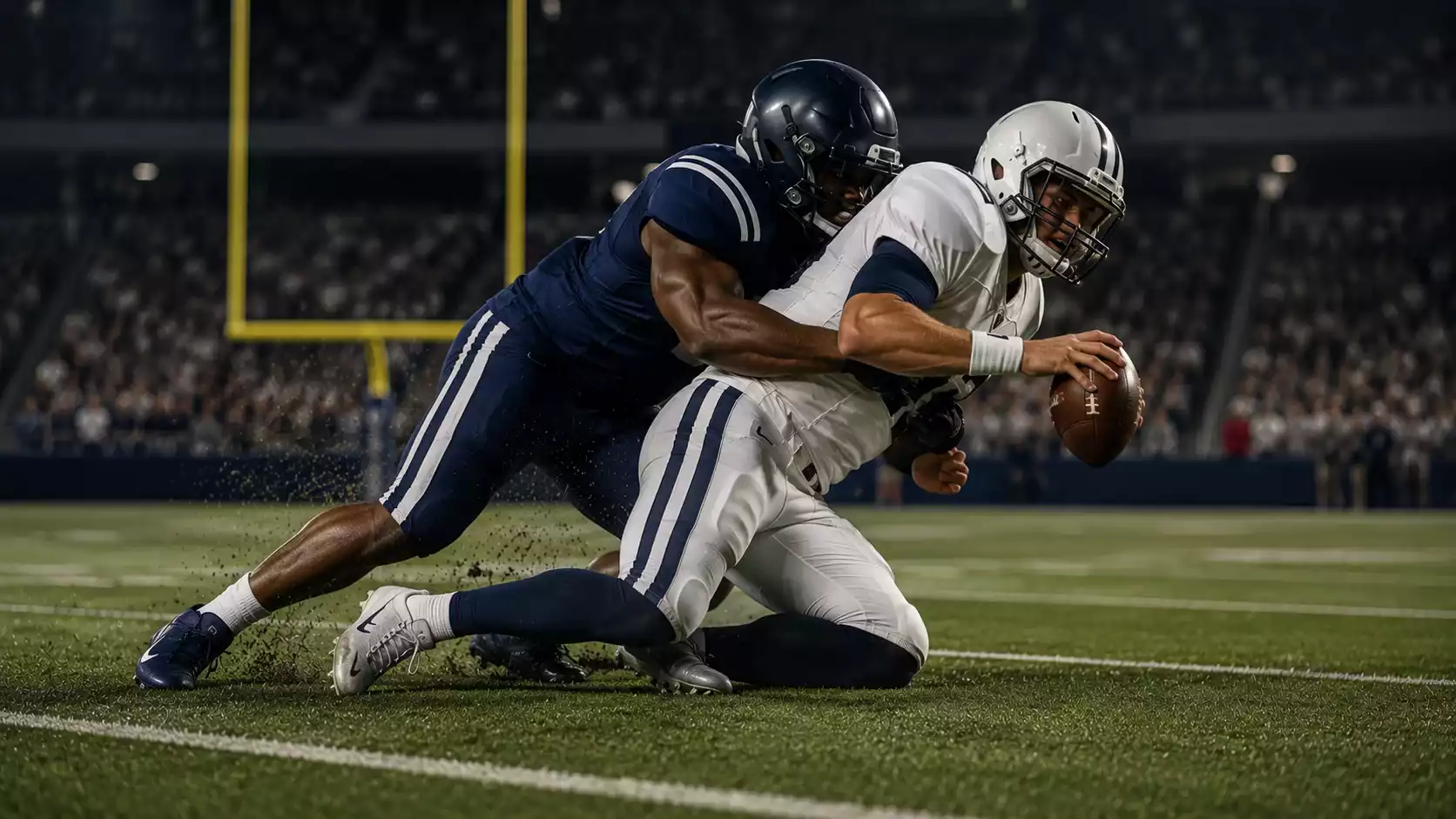
Six seasons of tracking DPOY voting patterns have left me with one uncomfortable conclusion: this award is not about who plays the best defence. It’s about who accumulates the most sacks. Voters overwhelmingly reward pass rushers with gaudy sack totals over interior linemen, linebackers, and defensive backs who might contribute more to their team’s overall defensive success but do so in less visible ways. If you want to bet this market profitably, you need to accept that bias and exploit it rather than fight it.
The DPOY market is smaller and less liquid than the MVP or Super Bowl futures markets, which cuts both ways. The hold is lower — typically 15-20% rather than the 30%+ on MVP futures — but the odds can be volatile and the market less efficient. Bookmakers devote less analytical firepower to pricing defensive awards, which means the gaps between sharp and soft prices are wider. For a bettor willing to do the work, that inefficiency translates directly to value.
Edge Rusher DPOY Dominance and Voter Bias
I built a database of every DPOY vote from the past fifteen years and the pattern is stark. Edge rushers and defensive ends have won the award in roughly 70% of seasons. Interior defensive linemen and linebackers pick up most of the remaining wins, and cornerbacks have won exactly twice in two decades. The single most predictive variable for winning DPOY is finishing in the top three in sacks — which tells you more about voter psychology than about the true value of pass-rushing production.
The sack bias exists because sacks are the most visible and easily quantified defensive statistic. A 16-sack season makes highlight reels and generates media narratives in ways that a cornerback’s 0.45 yards per coverage snap or an interior lineman’s 85% run-stop rate simply cannot. Voters, who are primarily media members, respond to narratives they can see and articulate. A dominant corner who holds opponents to zero catches in multiple games doesn’t generate the same headlines as a pass rusher who strips the ball from the quarterback in a primetime game.
This bias creates a clear betting strategy: back edge rushers, specifically those on teams projected to have winning records. Team success matters because voters rarely give the award to a player on a losing team, even if his individual statistics are extraordinary. A 15-sack season on a 12-5 team beats an 18-sack season on a 6-11 team in almost every historical comparison. I weight this team-success filter as heavily as the individual production projection.
BetMGM’s trading desk reveals something useful about how bookmakers think about defensive futures. When their trading manager Christian Cipollini identifies specific teams as “worst outcomes” for the book, those liability positions often include teams whose defensive stars have attracted heavy public betting at short prices. Monitoring which defenders are attracting the most public money tells you where the market might be overcorrected and where the true value lies on the other side.
2026 DPOY Candidates and Odds
I evaluate DPOY candidates through a three-part framework: sack projection, team-success probability, and narrative momentum.
Sack projection is the quantitative backbone. I look at pressure rate (how often the rusher affects the quarterback, whether or not he finishes the sack), sack conversion rate (what percentage of pressures become sacks), and projected snap count. A pass rusher with a high pressure rate but a low sack conversion rate in the prior season is a prime candidate for positive regression — more of those pressures will convert to sacks, boosting his raw totals even without improving his underlying play. These players are routinely underpriced because the market focuses on last year’s sack total rather than the leading indicators.
Team-success probability acts as a qualifying gate. I eliminate any candidate whose team I project to win fewer than nine games. This cuts the field dramatically and prevents me from wasting units on statistically elite players who will be overlooked by voters because their teams are losing.
Narrative momentum is harder to quantify but equally important. A player entering his prime (age 24-28) on a team with playoff expectations, who had a strong but not historically great prior season, is the ideal DPOY story. Voters love the “breakout to superstar” narrative. A veteran with 12 sacks last year at 8/1 is often a worse bet than a 25-year-old with 10 sacks last year at 16/1, because the latter has a much more compelling narrative trajectory for voters to latch onto.
The least profitable approach is backing the defending winner. The DPOY has repeated in back-to-back seasons only once in the last 15 years. Voters suffer from novelty bias — they want to crown someone new, even when the incumbent is still the best defensive player in the league. Fading the defending champion and identifying the next narrative favourite has been one of my most consistent edges in this market.
DPOY vs DROY: Where Defensive Futures Overlap
A question I encounter regularly is whether a standout rookie can win DPOY instead of — or in addition to — Defensive Rookie of the Year. Historically, it’s happened once in recent memory, and the rookie needed an otherworldly statistical performance to break through. The far more common pattern is for a dominant rookie to win DROY comfortably while finishing fifth or sixth in DPOY voting — good enough to generate buzz but not enough to overcome the voter preference for established veterans with multi-season track records.
This overlap matters for portfolio construction. If I’m backing a young pass rusher as a DPOY longshot, I want to check whether the same player is available in the DROY market at a shorter price. Sometimes the smarter play is to take the DROY bet at 5/1 rather than the DPOY bet at 25/1, because the probability of winning the rookie award is substantially higher while the expected value might be comparable. The Rookie of the Year odds analysis covers the specific dynamics of the DROY market and how to evaluate first-year defenders.
Conversely, if a second-year pass rusher had an exceptional rookie campaign and isn’t eligible for DROY anymore, the DPOY market becomes his primary award vehicle. These sophomore surgers — players who dominated as rookies and project to take another step in year two — are among the best value plays in the entire DPOY market because the public still thinks of them as “young” and underestimates their readiness to win a veteran-dominated award.
Has a cornerback ever won Defensive Player of the Year?
Yes, but it is rare. Cornerbacks have won DPOY only a handful of times across the award’s history, and in most cases the winner had exceptional interception totals alongside strong coverage statistics. The sack-driven voter bias makes it extremely difficult for any non-pass-rusher to win, which is why I focus my DPOY betting exclusively on edge rushers and occasionally interior linemen.
Do DPOY winners usually come from top-ranked defences?
Most DPOY winners play for defences that rank in the top ten, but the correlation is with team wins rather than defensive ranking specifically. A pass rusher on a 12-4 team with a middle-of-the-pack defence will outpoll an equally productive rusher on a 7-10 team with a top-five defence. Voters respond to winning, and the team’s overall record matters more than its defensive ranking in isolation.
Created by the ”Best nfl Futures Bets” editorial team.