NFL Prediction Markets vs Traditional Futures
 Available in US
In 2024, I watched a friend trade NFL event contracts on a prediction market platform alongside his traditional futures positions at a bookmaker. He was effectively placing the same bet — that a specific team would win the Super Bowl — through two entirely different systems. The prediction market priced the outcome at 11 cents on the dollar (implying roughly 11% probability). His bookmaker had the same team at 9/1 (implying roughly 10% probability after accounting for vig). Two markets, two pricing mechanisms, two regulatory frameworks — and the prices were close enough to suggest they were processing similar information but structured differently enough to matter for a UK bettor trying to decide where to put their money.
Prediction markets have exploded into mainstream consciousness over the past two years, fuelled by high-profile political betting during the 2024 US election cycle and the growing availability of sports-focused event contracts. The American Gaming Association has described the battle against prediction markets as “a defining fight for our industry,” and the regulatory landscape is evolving rapidly. For UK bettors, understanding how these platforms work — and how they differ from the futures markets you already know — is becoming increasingly relevant.
Prediction Markets NFL Outcome Pricing
Traditional bookmakers set odds based on their own assessment of probabilities, adjusted for margin and liability management. They decide the price, and you decide whether to take it. The bookmaker bears the risk of getting the price wrong and profits from the built-in margin across the entire market.
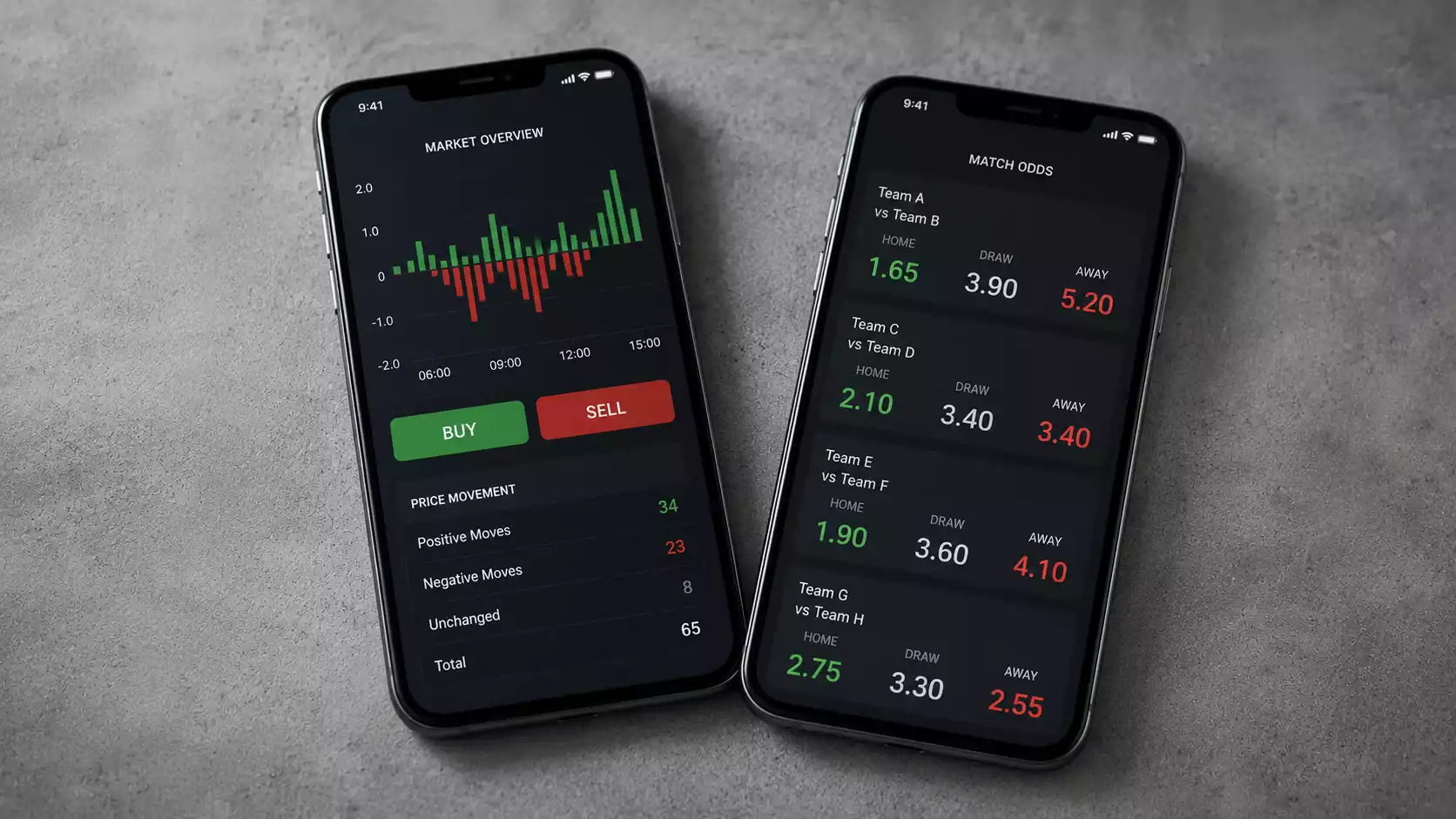
Prediction markets flip this model. They function more like stock exchanges than bookmakers. Participants buy and sell contracts that pay out a fixed amount (typically $1 or £1) if a specific outcome occurs and nothing if it doesn’t. The price of the contract at any given time reflects the collective belief of all market participants about the probability of the outcome. If a contract trades at 0.15, the market is implying a 15% probability. If you think the true probability is 20%, you buy the contract and wait for either the price to rise or the event to settle in your favour.
The margin structure is fundamentally different. Prediction markets charge a small transaction fee — typically 1-5% — rather than embedding a 20-30% hold in the pricing. This means that the prices in prediction markets are closer to “true” probabilities than bookmaker odds, which always inflate implied probabilities to create the margin. For a bettor trying to identify mispriced outcomes, prediction market prices provide a cleaner benchmark against which to evaluate traditional bookmaker odds.
The trade-off is liquidity. NFL prediction markets — particularly for non-headline outcomes like division winners, win totals, or player props — are far thinner than the equivalent bookmaker markets. You might want to buy a conference-winner contract but find that the available volume at your desired price is a fraction of what you could stake at a bookmaker. For large positions or obscure markets, traditional bookmakers remain the more practical venue.
The Regulatory Battle: AGA, CFTC, and State Laws
The legal status of prediction markets for sports events is one of the most contested regulatory questions in US gambling policy. The AGA has taken an aggressive stance, framing prediction markets as unlicensed gambling operations that circumvent the state-regulated framework built over the past decade. Former New Jersey Governor Chris Christie, serving as a strategic adviser to the AGA, has been equally blunt, arguing that event contracts on sports outcomes are functionally identical to traditional sports bets regardless of how the platforms describe their products.
The Commodity Futures Trading Commission has been the battleground regulator. Some prediction market platforms have sought CFTC approval to operate as regulated exchanges, arguing that their contracts are financial instruments rather than gambling products. The distinction matters enormously — financial instruments are regulated federally, while gambling is regulated by individual states. If prediction markets are classified as financial instruments, they bypass the entire state-by-state sports betting licensing framework that generates billions in tax revenue and supports responsible gambling infrastructure.
For UK bettors, this regulatory battle is relevant primarily because it determines which platforms are accessible and how they operate. UK-based platforms are subject to Gambling Commission regulation regardless of how they’re structured, while US-based prediction markets that don’t hold UK licences occupy a grey area. I don’t use unregulated platforms for any betting activity — the consumer protections, dispute resolution mechanisms, and fund-safety requirements that come with UKGC licensing are too valuable to forgo for the sake of slightly better pricing.
Prediction Markets and UK Bettors: Access and Alternatives
UK bettors’ access to sports prediction markets is more limited than their access to traditional bookmakers, for regulatory reasons that are unlikely to change soon. The UKGC requires any platform offering betting products to UK residents to hold a valid licence, and most US-based prediction market platforms either don’t hold UK licences or have restricted access to UK users voluntarily.
Betting exchanges available in the UK function as a partial substitute. They use a similar mechanism — matching buyers and sellers rather than setting fixed odds — and offer the same structural advantages of lower margins and price discovery. For NFL futures, the exchange model provides a close approximation of the prediction market experience within the regulated UK framework. The practical differences are in interface design and contract structure rather than fundamental pricing mechanics.
Where prediction markets currently have an edge over both bookmakers and exchanges is in information aggregation. Because prediction market prices reflect the real-money beliefs of all participants, they serve as a real-time consensus probability that can inform your own analysis. Even if you can’t trade directly on a prediction market, monitoring the prices it produces gives you a useful reference point for evaluating whether your bookmaker’s odds are generous or stingy relative to the market consensus. I check prediction market prices for every major NFL futures position I’m considering, even though I place all my actual bets through UK-licensed bookmakers. For a full overview of the UK betting landscape and how it accommodates NFL wagering, the UK betting guide covers the regulatory and practical foundations.
Are prediction markets legal for NFL betting in the UK?
Prediction market platforms must hold a UK Gambling Commission licence to legally offer betting products to UK residents. Most US-based prediction market platforms do not hold UKGC licences, which limits direct access for UK bettors. UK-regulated betting exchanges offer a structurally similar experience — matching buyers and sellers rather than setting fixed odds — within the licensed framework.
Do prediction markets offer better odds than bookmakers for NFL futures?
Prediction markets typically charge lower transaction fees (1-5%) compared to the 20-30% hold embedded in traditional bookmaker odds, which means their prices are closer to true probabilities. However, liquidity on NFL futures can be thin, particularly for non-headline markets. The most practical approach for UK bettors is to use prediction market prices as a reference benchmark while placing bets through regulated bookmakers or exchanges with sufficient liquidity.
Written by the editors at Best nfl Futures Bets.